
The Fragility of the Mothership: What Massive Corporate Layouts Teach Us About Why we have to Build Local Innovation Capacity
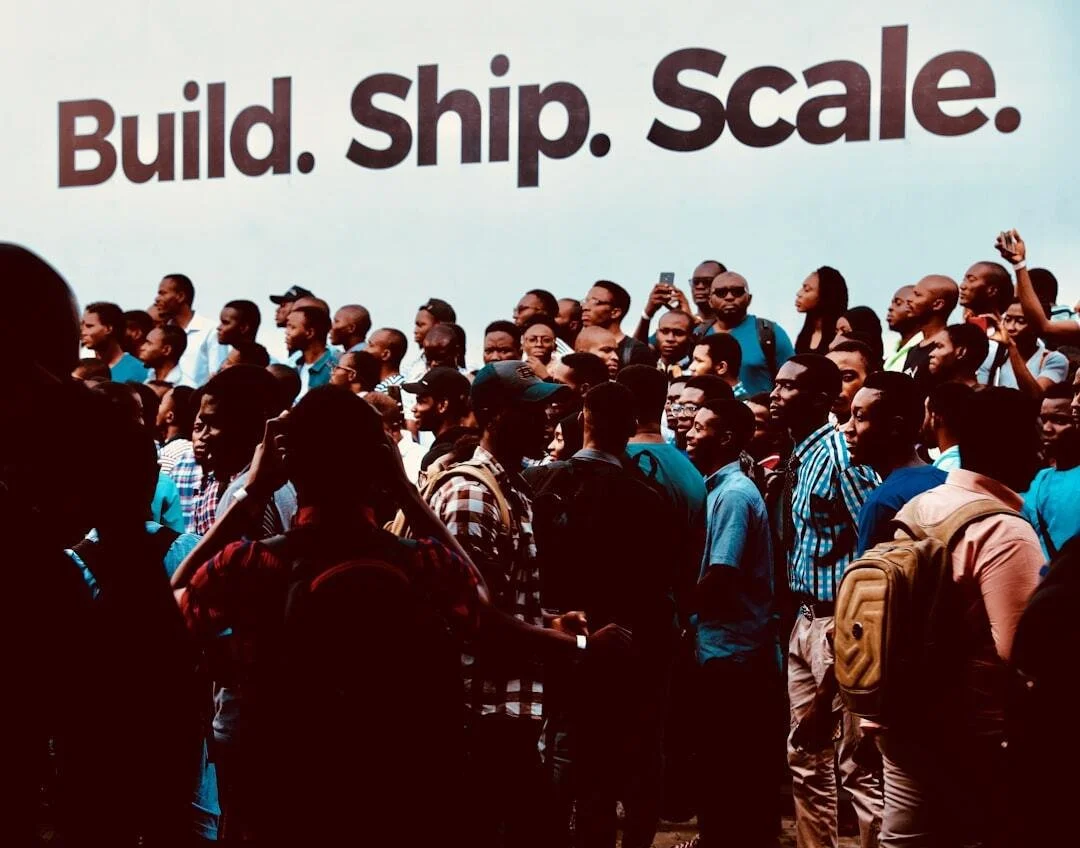
It’s no secret that conventional economic development is still obsessed with the “build it” approach: land the corporate whale, hand over the tax incentives, and anchor the community’s future to a global mothership.
But when Microsoft restructuring slashes 4,800 jobs overnight to pivot toward automated and AI-driven production, the structural fracture lines in this strategy become impossible to ignore. Communities that tied their long-term economic stability to an external corporate titan are suddenly left holding an empty bag.
Over and over again, we mistake a massive corporate footprint for a resilient local foundation.
In an era like the one we’re living through, ground conditions don’t shift incrementally, predictably. They transform in sudden, volatile waves: the Black Swan event becomes a near-daily occurrence. And as we have seen so tragically, most recently in Venezuela and Gaza, rigid structures respond to violent shocks by falling apart.
When a global conglomerate pivots, it is simply a top-down machine optimizing for its own bottom line, entirely indifferent to the local geography it leaves behind. If a city’s economy depends on a handful of corporate banners, rather than a diverse, self-sustaining ecosystem, it will remain perpetually vulnerable to spreadsheet decisions made thousands of miles away.
We’ve been learning this the hard way since at least the 1970s. Welcome to my childhood, part XLVII.
To survive these inevitable shifts, we must stop treating our communities as passive hosts for external capital, and start recognizing them as living networks that must generate their own adaptive capacity.
As economic developers and local business and political leaders, we have no choice but to make a profound shift from a “build it” mindset to a “grow it” one, where we intentionally cultivate the economic soil from within.
Instead of exhausting public resources to chase the next fleeting monolith, our collective energy must go into building thick, localized networks where homegrown innovators, creative entrepreneurs, and local problem-solvers can collaborate and cross-pollinate.
When we embrace the reality that everyone can and does innovates here, we create a decentralized, interconnected web of local wealth, agency, and resilience.
That is how we move past fragile corporate dependency—by growing an authentic ecosystem that doesn’t just withstand the next corporate restructuring, but renders it irrelevant.
