
The power of the minority perspective
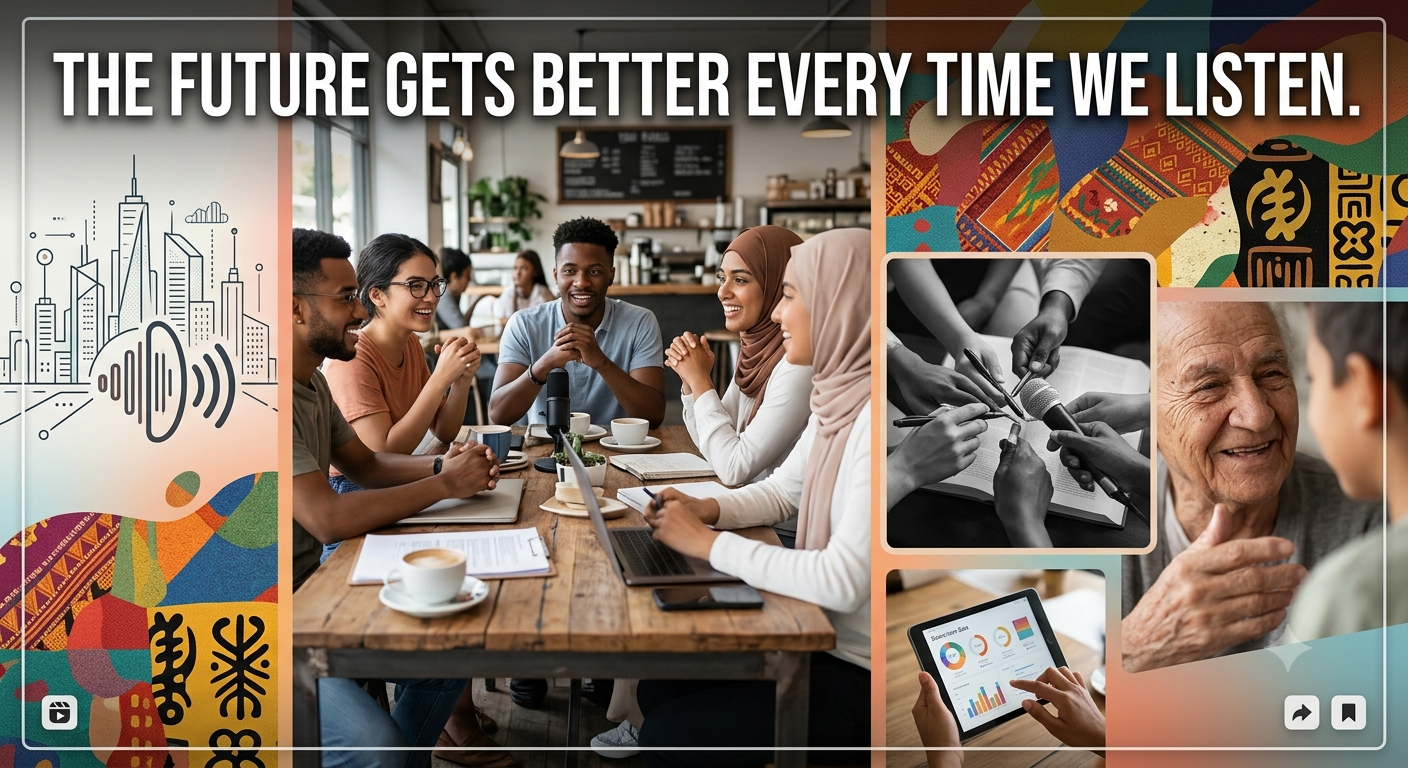
All of us, of every background, need to learn and sit with and understand the Black experience. Those of us who have not lived in that experience will never truly understand the frictions and the micro-aggressions and the unjustices that our Black colleagues experience near daily.
But the more we try, even when it’s uncomfortable or unsettling or difficult, or when we do it wrong, the more we will learn. And that learning is essential to living and working in a Future Ready manner. The same is true with other minority perspectives. Trying to hang on to some claim of majority when, nationally and globally, that’s no longer the case, makes us fools.
These three recent articles give us more evidence of how understanding more diverse perspectives makes us better equipped to deal with the world unfolding around us. And I’m intentionally drawing this time from sources that don’t originate in the U.S. — as another way of getting at the idea that we need to engage with a much wider variety of perspectives than our old tribal wiring often leads us to.
Diversity is completely the opposite of the bad world that some regressive voices want us to think it is.
Diversity is how we become Future Ready.
Make African Economic History great again!
Johan Fourie is an author and professor of economic history in South Africa. In this post, Fourieargues that African economic history scholarship must move beyond describing the past toward practical application, helping policymakers address contemporary challenges like climate change, technological disruption, and inequality. By framing historical lessons as usable analogies and narratives—and engaging African scholars and institutions—the field can demonstrate that studying the past equips one to shape the future.
In the West, we’ve imbibed this old story of how non-western thinking doesn’t have any value to us — that we’re somehow past that or superior to it. But as Prof. Fourie demonstrates here, African history has enormous value today — precisely because it comes from a perspective and a paradigm that is not the one that we’ve let dominate the world in the past 100 years. How can you find new solutions when the systems you’ve inherited clearly aren’t cutting it? The logical conclusion: look to how others outside your paradigm have done it.
The Zimbabwean Doctor Aligning modern drugs with African genes
Professor Collen Masimirembwa has spent three decades demonstrating that standardized pharmaceutical treatments developed for general populations don’t work equally for people of African ancestry, using genetic research to show why medicines like efavirenz and tamoxifen require different dosages for African patients. His work exemplifies how African scientific expertise and advocacy can correct global medical practices and protect African health outcomes.
This article talks about the benefits of Dr. Masimirembwa’s research to Africans, but just imagine for a minute the broader scope of improvement that his findings may create. Billions of people in the world may react differently to standard drugs that were developed for European-descended patients by mostly European-descended professionals. How many others could get more effective care and live better lives simply because global medical practices could be adjusted to better fit the people in front of them? And how long would European-descended doctors continued to be oblivious to this reality?
Listening to Hear
This reflection from Dr. Alison Stine of Nonprofit Quarterly’s “Justice this Week” newsletter drives home one of the most important elements of diversity — the opportunity, the challenge, the necessity and the gift of asking others what they need to be able to participate fully. Her comments don’t seem to be available online, so I am reprinting her brief comments in full.
Deafness is a spectrum, and where I fall on it is difficulty hearing in a crowded room, large space, or group setting—or when someone is right next to me on my deaf side, mumbling. As a writer and academic, I’ve been to countless public events where the moderator simply discarded the microphone because it was bothersome to them personally, after asking: We don’t need this, right?
But that was a rhetorical question. It’s impossible to know accessibility or any needs unless you sincerely ask, and sincerely listen. As a deaf person, that’s something I’ve learned the hearing sometimes have difficulty doing: listening to learn, listening to hear and to understand.
In this installment of Justice This Week, we’re listening to hear, from protests at COP30 led by Indigenous peoples to the fight of trans people in Southeast Asia to have their gender recognized.
Solidarity begins with a simple action, asking: What do you need?Then, be ready to listen to and believe the answer.
Ask sincerely, listen, and believe the answer.
Perhaps that is what we most need to do in order to unlock the benefits of diversity. And it’s the first steps in creating what Dr. King envisioned.
And it’s what Future Readiness requires of us.
