
Future Here Now: I See Usability
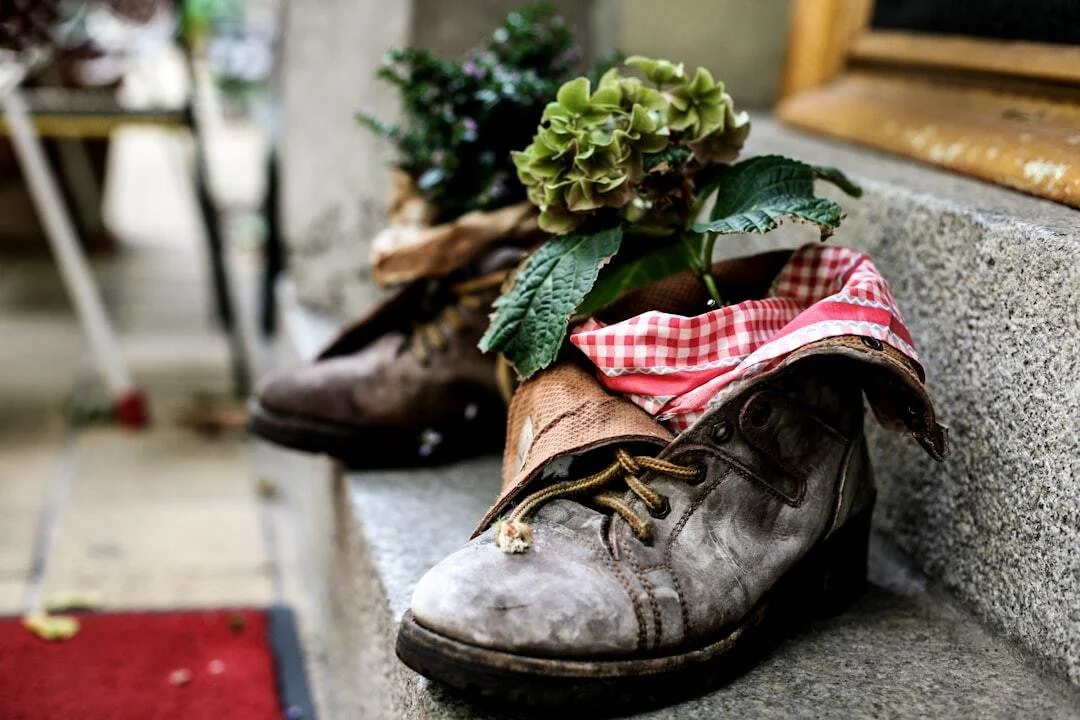
🧰 The Lesson That Took Me Years to Understand
I wrote an early version of this piece more than a decade ago, in The Local Economy Revolution Has Arrived.
Time has passed. Markets have shifted. Conversations have evolved.
But this idea—simple, stubborn, almost inconveniently true—still sits at the center of everything:
I see usability.
That was my dad’s favorite phrase.
🔧 A Man Who Saw What Others Missed
My dad had no hesitation about pulling things off the curb in front of the neighbors’ houses.
Not for scrap.
Not for resale.
Not for quick cash.
He was looking for something far more valuable:
👉 Usability.
You’d probably call him a tinkerer.
He always had projects in motion—cars in pieces, gadgets mid-repair, ideas scattered across the garage like sparks waiting to catch.
Tin cans became something.
Discarded fittings became something.
Even a pile of tire irons on garbage day? Also something.
When I came home to visit, I knew the ritual.
He’d walk me through his latest discoveries like a curator unveiling a masterpiece.
And then, inevitably, he’d pause—
stand up a little straighter—
hold up what looked like absolute junk—
…and declare, with conviction:
“I…see…usability.”
👀 The Problem: I Didn’t See It
I nodded. I smiled.
But I didn’t see it.
Even when he finished something—which wasn’t always—I didn’t get it.
These weren’t exactly museum pieces.
But that was never the point.
He wasn’t chasing beauty.
He wasn’t chasing perfection.
👉 He was chasing potential.
🏚️ The Same Blind Spot—Scaled Up
Looking back, I realize this is exactly why he understood something long before I did:
The value of old places.
Growing up in a small town, everything around me felt… tired.
Outdated houses.
Aging buildings.
Endless maintenance.
Meanwhile, newer neighborhoods had the things that seemed to matter:
Central air
Clean walls
Modern systems
Effortless comfort
Old places felt like a burden.
New places felt like progress.
🧠 Then Reality Hit (Hard)
In the 1990s, I became a historic preservation specialist.
Yes—
I’m partly responsible for putting some truly unattractive buildings on the National Register of Historic Places.
At the time, in northern Wisconsin, preservation wasn’t exactly mainstream thinking.
Let’s be honest—people thought it was fringe at best.
Green Bay still had a standing plan to demolish most of its historic downtown buildings.
Not “maybe someday.”
👉 Systematically. Intentionally. Inevitably.
I remember crawling through the basement of one of the last buildings before demolition—documenting its final days.
I still have those photos.
At the time, the economic case for preservation was just beginning to surface.
But my dad?
He already understood it completely.
📰 The Clippings That Said Everything
He started mailing me newspaper clippings.
(Yes, actual clippings. Folded. Mailed. Physical proof of enthusiasm.)
When we talked, he was more excited about a bridge rehab or a building restoration than anything else in his day-to-day life.
He saw it.
Even then.
Even before most professionals did.
⏳ The Moment That Stays With Me
Nine months before my second son was born, my dad was diagnosed with a brain tumor.
The last time I saw him was about a month before the baby arrived.
Before I left, he handed me a large envelope.
Inside: more clippings.
By then, the cancer had begun to take his ability to read and write.
My name was written on the envelope—with three L’s.
We sat together and went through them.
Story after story.
Places I had never heard of.
Rehabs. Revivals. Quiet transformations.
And then, in a moment that cut through everything else, he looked at me and said:
👉 He was proud of me.
👉 That what I was doing mattered.
At a time when I wasn’t sure I could keep going—
with a toddler, another child on the way, and pressure from every direction—
That mattered more than I can explain.
🕊️ What He Really Gave Me
He died a week after my son was born.
We gave our son his name—one of five my dad had suggested.
And somewhere in all of this, the lesson finally settled in.
Not all at once.
But deeply.
Permanently.
🌆 Why Places Matter (Even When We Can’t Explain It)
After years of research, conversations, and experience, I still can’t fully explain why old places matter so much.
Yes, there are rational answers:
History
Human scale
Material quality
Walkability
Identity
But those explanations feel… incomplete.
Because the truth runs deeper.
🔥 The Real Reason
Maybe it’s this:
👉 Even the most run-down places still have usability.
👉 Even the most overlooked spaces still carry possibility.
👉 Even what looks finished… isn’t finished.
And that’s where the real value lives.
Not just economically.
But emotionally.
Culturally.
Humanly.
🚀 The Future Isn’t New—It’s Re-seen
We’ve been trained to look for the next thing.
The shiny thing.
The scalable, optimized, efficient thing.
But the future?
It’s often hiding in plain sight.
In what we already have.
In what we almost threw away.
In what someone—like my dad—looked at and said:
“I see usability.”
📚 If This Resonates, Don’t Let It Sit Here
Let’s be blunt:
Reading and nodding isn’t enough.
If you believe in this idea—
if you care about local economies, communities, and the future of places—
👉 Go deeper. Take action.
🔗 Start Here
🌐 Explore insights, books, and resources:
http://wiseeconomy.com/
📰 Subscribe to Future Here Now:
https://www.substack.com/
🎤 Bring This Conversation to Your Community
If you’re serious about:
Revitalizing local economies
Rethinking development
Unlocking hidden value in your community
👉 Let’s talk.
Workshops. Speaking. Strategy.
Because this idea?
It’s not theory.
It’s a shift in how we see—and what we choose to build.
📣 One More Thing
If you’ve been reading for a while…
If these ideas have been circling in your head…
If something here keeps nudging you—
👉 Share this.
👉 Talk about it.
👉 Apply it.
Because the real risk isn’t that places have no value.
It’s that we fail to see it.
♻️ And That’s the Whole Point
Some people see junk.
Some people see history.
Some people see problems.
But a few—
the ones who change things—
pause, look closer, and say:
“I see usability.”
