
Future Here Now: Understanding Our Plastic Minds
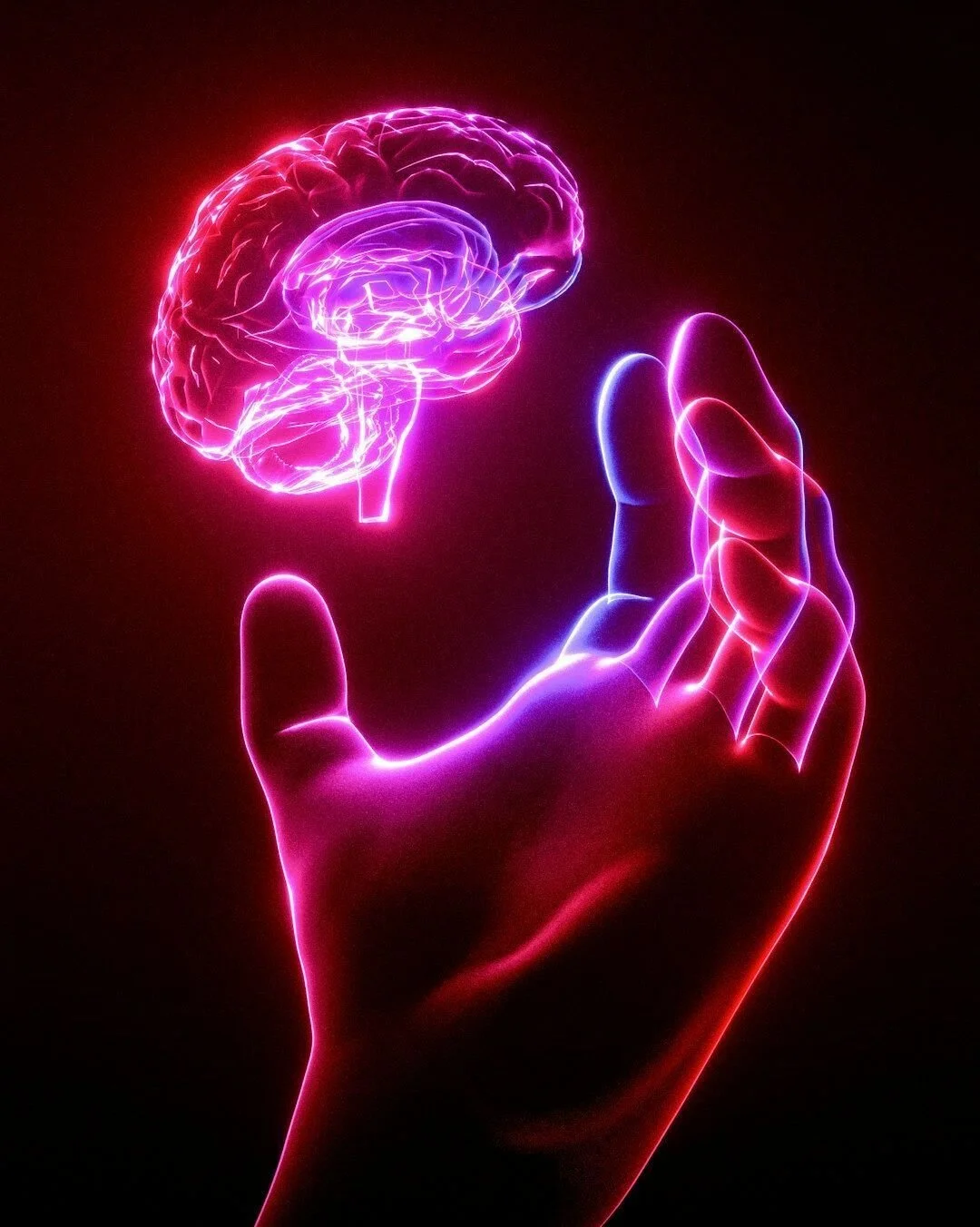
The myth of the “fixed” brain is dead. Good riddance.
Let’s get one thing out of the way.
Your brain is not a dried-up sponge.
It’s not a fossil.
And it’s definitely not a gallon milk jug.
It’s alive. Adaptive. Restless.
Neuroplasticity—the brain’s ability to form new connections, patterns, and systems—isn’t about bending or melting. It’s about rewiring. Quietly, constantly, powerfully.
And whether you realize it or not…
you are doing it right now.
🧠 The Lie We Were Told
For over a century, science pushed a comforting—but dangerously limiting—idea:
Once you reach adulthood, your brain stops developing.
Game over.
Personality fixed.
Beliefs locked in.
Just a slow fade of synapses from there.
Not quite “set in stone”…
but close enough to concrete that most people stopped trying to change.
And honestly? That belief shaped entire generations of thinking:
“That’s just how I am.”
“You can’t teach an old dog new tricks.”
“This is how we’ve always done it.”
Sound familiar?
⚡ The Breakthrough That Changed Everything
By the early 1990s, neuroscience flipped the table.
Researchers demonstrated that new neural connections can form even in aging brains.
Let that sink in.
Not just in children.
Not just in prodigies.
In everyone.
But there’s a catch—and it’s a big one:
🧩 The older the brain, the more it demands:
Repetition
Intensity
Energy
Your brain is, quite literally, an energy-hungry machine.
And over millions of years, it evolved to conserve that energy at all costs.
Which leads to a slightly inconvenient truth:
🚧 Your brain is designed to resist the very changes you’re trying to make.
We didn’t need constant reinvention to survive mastodons.
But in today’s world?
We absolutely do.
🔄 Change Isn’t Natural—It’s Trained
Here’s where things get real.
If you’ve ever tried to:
Shift your mindset
Break a habit
Lead differently
Build something new
…and found yourself snapping back to old patterns?
That’s not weakness.
That’s wiring.
Your brain defaults to what it knows because it’s efficient—not because it’s right.
Neuroplasticity doesn’t remove resistance.
It explains it.
And more importantly—it gives you a way through it.
📚 The Book That Opened the Door
One of the most influential reads on this journey:
“The Mind and the Brain”
This isn’t a light beach read.
It’s the kind of book that quietly rewires how you understand yourself.
It helped me recognize something uncomfortable:
I wasn’t “adapting” as well as I thought I was.
I was recycling old patterns—learned in completely different contexts—and dragging them into new environments where they didn’t belong.
(Needless to say, that didn’t go unnoticed by my business partner.)
But that realization?
That’s where change begins.
🌐 The Simplicity of Understanding
If you want a clean, accessible explanation of neuroplasticity, the folks at the Cleveland Clinic do a surprisingly great job.
What stands out most isn’t the science—it’s the practicality.
You don’t need trauma or injury to benefit from neuroplasticity.
You just need:
Focus
Repetition
Consistency
When I was actively trying to shift my mindset, those three made all the difference.
No magic. No shortcuts. Just deliberate rewiring.
🧩 When Organizations Get Stuck: Change Paralysis
Now zoom out.
Because individuals aren’t the only ones struggling with old patterns.
Organizations are just collections of human brains.
And they get stuck too—sometimes faster.
A sharp piece from Forbes highlights how leadership teams fall into decision paralysis in the face of rapid change.
The insight?
We may not predict everything, but we can understand the trajectories we’re on—and avoid getting stuck.
Fair.
But here’s the missing layer:
Avoiding paralysis isn’t enough.
You need direction.
You need intention.
You need a clear alternative to move toward—not just something to move away from.
🚀 The Rise of the Neuroplastic Thinker
A neuroplastic mindset isn’t just about “being open.”
It’s about:
Critiquing the past without being trapped by it
Recognizing default patterns—and challenging them
Designing new ways of thinking, not just inheriting old ones
Because here’s the danger:
Old trajectories don’t just guide us.
They pull us back.
Hard.
🏢 The Neuroplastic Business (And Why Most Aren’t Ready)
Now imagine this:
What would a company look like if it truly embraced neuroplasticity?
Not as a buzzword.
Not as a workshop slide.
But as a core operating principle.
💡 Consider:
What if managing employee stress wasn’t HR’s side quest—but a strategic priority?
What if continuous learning wasn’t optional—but structural?
What if adaptability was measured, rewarded, and expected?
Most organizations today still run on inherited industrial-era models:
Rigid. Linear. Efficiency-obsessed.
But the future?
It belongs to systems that can learn faster than change happens.
And that requires something deeper than strategy.
It requires rewiring how people think.
🔥 So Here’s the Real Question
If we stopped blindly following inherited models…
If we treated human adaptability as the most valuable resource we have…
If we built businesses around learning, not just output…
👉 What would change?
And more importantly:
👉 What’s stopping you from starting?
🚀 Your Next Move (Don’t Just Read—Act)
If this sparked something—even a small shift—don’t let it fade.
Repetition builds wiring. Remember?
📚 Start here:
Get the book “The Mind and the Brain”
Begin understanding how your thinking actually works
🧠 Stay sharp:
Subscribe to Future Here Now
👉 https://www.substack.com/
This is where we continue exploring how to build future-ready minds in a world that refuses to sit still.
🎤 Go deeper (teams, leaders, organizations):
Explore speaking engagements & workshops
👉 http://wiseeconomy.com/
If you’re serious about navigating change—not just reacting to it—this is where the real work happens.
💬 Let’s Build This Together
I’m curious—
Where do you see neuroplasticity showing up in your work or life?
Where are you stuck in old patterns… even when you know better?
Drop your thoughts. Challenge the ideas. Push this further.
Because the future doesn’t belong to the smartest people.
It belongs to the ones who can change their minds—and then do it again.
