
Future Here Now: The Death of Direction
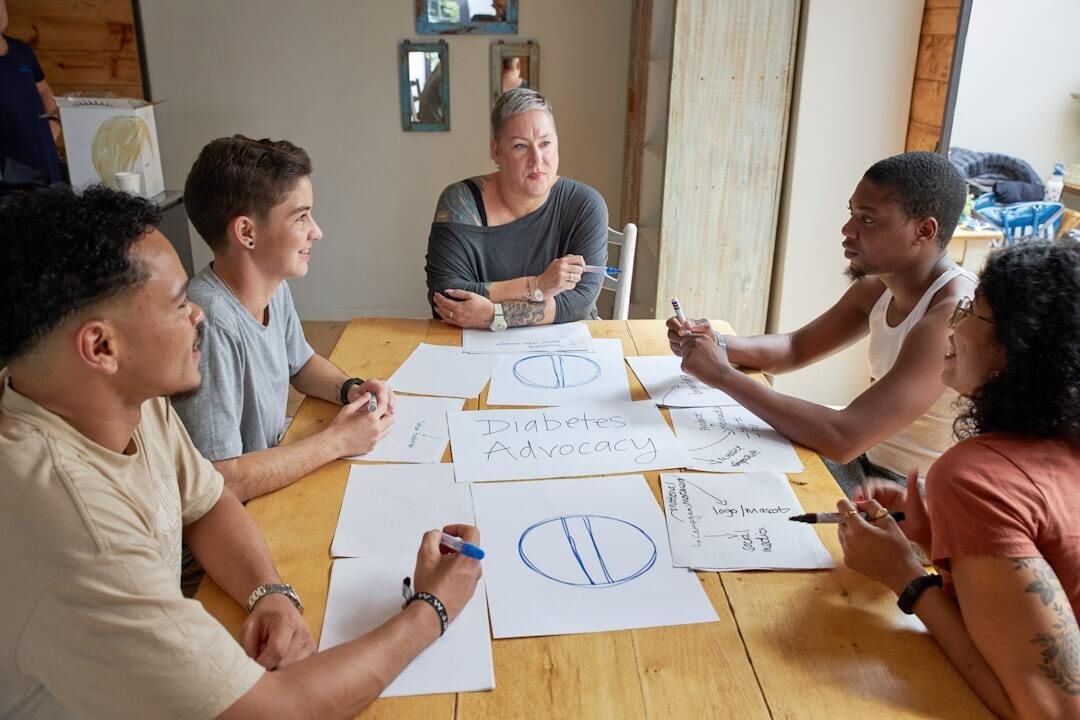
One of the biggest challenges most of us are facing could be called the Death of Direction. Or perhaps more accurately but less alliteratively, The Replacement of External Direction With Self-Direction. And we’re struggling to reconcile our assumptions with reality, from our personal lives to our communities
In the Industrial Era, a hierarchy dictated not only our tasks, but our relationships and how (or if) we collaborated with anyone else. You did the work with the team you were assigned, you socialized with the people you were supposed to stick with, you lived in the kinds of communities that fit your lifestyle — and unless you were one of the special ones, you let someone else tell you what your town needed and who you should vote for. When trust in leadership and the status quo goes largely unquestioned, you don’t need to build new connections.
That all sounds quaint today. Our workplaces, our social services, and virtually any individual initiative we’re working on depends on a cast of actors, over most of which we have almost none of that old direct control. We find that we have to develop deep collaboration to thrive, really to make almost any measurable progress.
The problem is, almost none of us ever learned how to do that.
Deep collaboration requires actively co-creating shared solutions… and that means that we have to fight our outdated habit of protecting personal turf. In a downtown or neighborhood trying to get a building rehabbed, for example, this means that the confidential agreements, the token “listening sessions,” the quiet walking back of promises, not only ruins goodwill, but increasingly means that this project, and future projects, run into intractable brick walls.
Deep collaboration means that no one person or organization holds all the cards. It means that shop owners, nonprofits and residents pool resources, and share risks, like they do in Buy Back the Block initiatives. And it means that streetscapes aren’t just copy-pasted from a pretty book of ideals, but that they employ a human centered design approach, building on how exactly people need to use the space today, while avoiding the closing of of future people and future uses.
True collaboration demands tearing down silos, and building frameworks where every participant holds real agency and actively shapes the final outcome.
To root this level of collaboration into the foundation of a community, organizations must construct systems that distribute power rather than hoard it. Building trust and transparency is hard, very hard, because so many of our systems are set up for the opposite reasons. But the more we build that kind of ecosystem, the more we forge an environment where the unconventional solutions that fit our situation best can finall find room to flourish to the table.
A corollary: it’s time to surrender the illusion of control. We don’t have it anymore, anyways. The emperor may have had clothes once, but when everyone has the internet, any chance of pretending anything but nakedness has evaporated. And the video will probably go viral.
If we cling to the defensive posture of holding onto the status quo, hoarding information, and demanding total authority over the process… Number one, we won’t get it. Number 2, we will look foolish when the truth comes out. Number three, whatever gossamer threads of trust we have started to build will snap and float away, while everyone around faces us with even more distrust than before.
Institutions often deliver lip service to collaboration because we fear the messy, volatile reality of actual distributed power. To nudge ourselves into genuine collaborative practices, we must expose the structural failures of isolated decision-making and highlight the destructive externalities those old methods produce.
We can initiate pilot projects that strictly enforce shared decision-making and cross-functional reliance. We can show ourselves that thriving in a radically uncertain future requires leaning into discomfort, trusting diverse perspectives, and listening intensely like investigators, rather than bureaucrats waiting for a turn to speak.
Once we experience the regenerative strength of authentic co-creation, we can abandon the fragile defenses of the past and embrace the vital work of becoming Future Ready.
